This Week's Book Week is sort of like Stacking the Shelves hosted by Tynga's Reviews only not as cleverly-named. ;)
Slow book week but awesome and fun Canadian YA Lit week. Follow along with the event posts for the next week and a half. There will be additional giveaways! :)
I hope everyone's been enjoying the Canadian YA Lit Event so far. :) Reminder that the Day 1 giveaway is only open until the end of the event. As long as Book Depository ships free to where you live, you can enter. And there's even a free entry option so you don't have to do anything (but if you want a better chance of winning, there are other ways you can enter). :)
Plague finger update: normal. My sister thinks it's looking a bit better. I think it looks better. We'll see once I finish the antibiotics and see what tests the doctor wants to run.
I started writing again, that was nice. It's a rewrite of a draft I wrote in 2010. It feels a bit odd right now, I shouldn't have left it for so long, but I like the different way it's going. :) I also like plotting and writing it with one of those streaming rain sounds sites in the background.
Received:
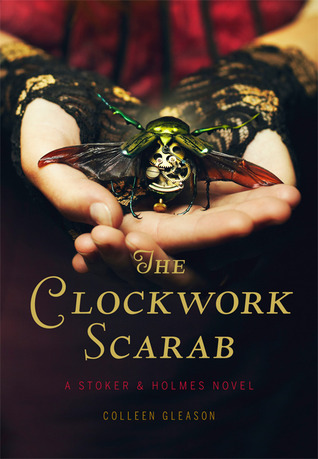
The Clockwork Scarab by Colleen Gleason (from Raincoast Books) (I'm rather tempted to read this now, it sounds interesting. And I've got this secret sort of love affair with steampunk in that, while I love it (particularly Meljean Brook's Iron Seas adult romance series), sometimes when I read it I'm disappointed because it's barely steampunk.)
Reviews of young adult novels and the occasional middle grade, adult fantasy, or graphic novel. Plugging Canadian YA when possible. :)
Saturday, May 4, 2013
Day 4 - Joelle Anthony
Day 4. Another BC author today. I know, I know. "What about the other provinces?" ;)
Joëlle Anthony currently lives on a small island really close to Vancouver Island in BC with her musician husband and their cats. After getting a B.A. in theatre, she got some headshots made and called herself an actress. The desire to write remained strong, and in between acting gigs she scribbled out her first book for teens. After many years of practice and lots of reading, she found her wonderful agent. Her YA debut, Restoring Harmony, came out on May of 2010, and her second, The Right and the Real, was released on April 26, 2012, both with Penguin. You can sometimes find her at her website or on Twitter, but more often than not she's enjoying the view from her writing cabin. ;)
Q: Since it's an event featuring Canadian authors, I figured I'd ask all the authors who chose the Q&A to say how they would count as a Canadian author, be it they were born here, lived here, or moved here. So, how Canadian are you?
A: I’m not as Canadian as I hope to be in a few months. On July 4th, 2011 we applied for Canadian citizenship. It’s taking about 22 months to process, so we’re still waiting, but we’re hopeful! I know all the words to Oh, Canada, so I’m ready. And I plan to set a book in Canada sometime soon. I have one in mind, but others are more pressing right now.
Q: On more than one occasion I've seen you mention your writing cabin. What brought about the idea of having such a place for you to do your writing? (Also, I imagine the view from your writing cabin is stunning.)
A: I think most writers have the dream of someplace special to write where no one will interrupt them, but I hadn’t really considered making it a reality because I had an office in the house. It seemed superfluous. However, not long after we got to Canada, my husband started volunteering in the community for all sorts of projects. Within a few years, he was sitting on boards, even chairing them, and our once silent phone started ringing all the time. I mean, all the time! Not only was it annoying, but it made it so hard for me to work…my husband is one of those very quiet people unless he’s on the phone. And then…well, anyway, let’s just say we were spending half of our time negotiating writing versus phone time. “If I can write until my snack break with the phone on do-not-disturb then you can make calls for fifteen minutes, but then I really need to write until one o’clock.” Stuff like that. In the end, we were both so frustrated that we decided a cabin was the answer. Ironically, about ten months after I got it, he was so burnt out he stepped down from almost all his committees and our phone hardly rings at all anymore, so I feel pretty lucky to have it!
Q: What's your favourite part of teaching workshops for kids and teens? How much of a difference is there between running a workshop with kids and running one with adults?
A: The thing I like about teaching kids is that they can be fearless. Especially those in Grade 6 & 7, which is one of the ages I teach a lot. You have to be a bit silly with them, but once they see that wacky is okay, they really let their imaginations take off. One of the most important things I incorporate into my workshops is sharing aloud. I make the kid come to the front of the classroom, too. It sounds daunting, but it really builds confidence in them once they try it.
There are a few differences between teaching kids and adults that really threw me at first. For one thing, adults are so quiet! And they take notes. The first time that I happened I wanted to say, “Really? What I’m saying is that important???” I was kind of flabbergasted. Also, when I teach kids, generally someone else is paying me to be there. Adults have forked over their money themselves and I have to admit, I worry…. “Are they getting their forty dollars worth?”
Another thing is the whole writing time. When I give kids a writing exercise, I will lie about the time to avoid arguments. If I tell them they have five minutes, they’ll freak out, “That’s not long enough!” So I always say, “Okay, you have ten minutes, go!” And then, after about three or four minutes, I say, “Just take two more minutes or so.” Then at five minutes, I say, “Okay, wrap it up.” And they never notice. But if you tell adults they have ten minutes, they want their ten minutes and they look pointedly at their iPhones if you try to cheat them.
Also, adults aren’t nearly as brave about sharing as kids. The kids are dying to share, if not actually stand up in front of the class, then at least with their friends sitting next to them. Adults, not so much. They’re too afraid of not being perfect. Kids aren’t locked into that idea yet.
Q: Your first book, Restoring Harmony, takes place in the near future after the world suffers an economic collapse. What first inspired you to write Molly's story? How important was it to have music be such a big part of Molly's life?
A: There’s a book out called THE LONG EMERGENCY by James Kuntsler and in it he predicts what the world will look like after the end of oil. His take is that there will be a period of mayhem while people figure out how to recreate society. I wasn’t much interested in writing about an actual economic crash, but the time period after seemed like an interesting setting for a book. I guess you could say his theories were the impetus, but I don’t really agree with all his says or anything. I do think economic collapse beyond what we’re seeing now is possible though, and I was interested in exploring how people might react.
Music is terribly important in my life because my husband is a singer/songwriter/musician and so we have a lot of live music. One thing he often talks about is how “cheap” music has become because of recordings. Back in the day before radio and records, if you were a musician, you were highly valued. He wrote a song called Keep the Faith with the line: When the fiddler leaves, the dancing stops. What it means is that if you’ve got no fiddler to play, the dance is over. I liked the idea of a crash like in Restoring Harmony bringing back the value of live musicians and their talents.
Q: The Right & the Real is different than your first book, it's rather powerful but also frightening. How important was it to make Jamie flawed and still able to make mistakes but still be strong enough to keep moving forward, even after being abandoned by her father?
A: I think all characters have to be flawed to be real. I would say that Molly from Restoring Harmony is possibly a little too perfect. I would probably mess with her a bit more now that I know more about writing. So when I got to Jamie, I wanted her to be real. I wanted some of the problems she has to stem from her own flaws so that the world around her is not entirely to blame for what happens to her.
When I look back on troubled times in my own life, I can see ways that I increased the misery by the choices I made. At the time, I was doing the best I could, and that’s true for Jamie, but I hope (theoretically) that when she’s twenty-five or thirty, she can look back on her situation and realize she should’ve asked for help. If not from an adult, then at least from her friends.
Q: I know you and Eileen Cook are good friends. How did the two of you first meet? What's it like having Eileen as a critique partner/early reader/author friend?
A: Eileen and I met online. I was searching for an agent and hers had posted an excerpt from her upcoming book and it was about an American in Vancouver. We were in the process of immigrating to Canada, so I emailed and told her how funny it was and how I’d had some of the same issues as her character while visiting Canada. That was about eight years ago and our friendship blossomed from there.
I wouldn’t have any books published without her. She’s a total star. I mean, I’m not saying she wrote my books or anything, although, that is always something worth considering! She’s just always there for me. She not only reads early drafts and gives great critiques, but I can send her a revised scene and she’ll read it on her break from writing her own books and get right back to me. She’s truly a champion for me, and everyone needs one (I have several, actually, so I’m pretty lucky).
Eileen helped walk me through finding an agent, too, and when my first agent didn’t work out, she held my hand as I started over. In the last year, we’ve had a lot more opportunity to see each other in person. Even though she’s not technically that far from me, Vancouver is two expensive ferry rides from my island, so the first four and a half years we lived here, I never got over there at all and she only came here once. But now we’re booking events together and just making more of an effort to see each other because we’ve realized that there’s nothing like a good meal and a glass of wine together. So much fun. Sometimes we even talk about things besides writing and publishing!
Q: Since you're a vegetarian, what is your favourite vegetarian dish (an entree, soup, salad, sandwich, etc.)?
A: Anything someone else makes! Isn’t that the answer all cooks give? I make almost all of the food we eat, so it’s true that I really do like it when someone else cooks for me. Let’s see…I’m a big fan of a red lentil dal soup with sautéed onions and lemon slices that I make. Actually, I guess you could say my favourite type of food is Indian. I’m a sucker for nan bread, rice, and lentil yumminess.
At home, I really love to make plates of what we call “snackage” which is just a silly word my husband coined for a snack. What I usually end up doing is making the same thing over and over for snackage until I’m sick of it, and then I come up with something new. Right now, a plate of snackage consist of some whole wheat crackers with (vegan) sharp cheddar cheese spread (I make this from cashews), some carrots from the garden (yes, we’re still eating last year’s carrots and they’re a hundred times better than anything you can buy in the store) with ranch dressing, maybe a dill pickle, and a piece of dark chocolate with some dried fruit. I love to eat this around 11am when I take my first writing break. Mmmmm…now I’m hungry! Thanks for having me to chat. It’s been fun.
So many thanks to Joëlle for dropping in and taking part. Go check out Restoring Harmony and The Right and the Real now!
Joëlle Anthony currently lives on a small island really close to Vancouver Island in BC with her musician husband and their cats. After getting a B.A. in theatre, she got some headshots made and called herself an actress. The desire to write remained strong, and in between acting gigs she scribbled out her first book for teens. After many years of practice and lots of reading, she found her wonderful agent. Her YA debut, Restoring Harmony, came out on May of 2010, and her second, The Right and the Real, was released on April 26, 2012, both with Penguin. You can sometimes find her at her website or on Twitter, but more often than not she's enjoying the view from her writing cabin. ;)
A: I’m not as Canadian as I hope to be in a few months. On July 4th, 2011 we applied for Canadian citizenship. It’s taking about 22 months to process, so we’re still waiting, but we’re hopeful! I know all the words to Oh, Canada, so I’m ready. And I plan to set a book in Canada sometime soon. I have one in mind, but others are more pressing right now.
Q: On more than one occasion I've seen you mention your writing cabin. What brought about the idea of having such a place for you to do your writing? (Also, I imagine the view from your writing cabin is stunning.)
A: I think most writers have the dream of someplace special to write where no one will interrupt them, but I hadn’t really considered making it a reality because I had an office in the house. It seemed superfluous. However, not long after we got to Canada, my husband started volunteering in the community for all sorts of projects. Within a few years, he was sitting on boards, even chairing them, and our once silent phone started ringing all the time. I mean, all the time! Not only was it annoying, but it made it so hard for me to work…my husband is one of those very quiet people unless he’s on the phone. And then…well, anyway, let’s just say we were spending half of our time negotiating writing versus phone time. “If I can write until my snack break with the phone on do-not-disturb then you can make calls for fifteen minutes, but then I really need to write until one o’clock.” Stuff like that. In the end, we were both so frustrated that we decided a cabin was the answer. Ironically, about ten months after I got it, he was so burnt out he stepped down from almost all his committees and our phone hardly rings at all anymore, so I feel pretty lucky to have it!
Q: What's your favourite part of teaching workshops for kids and teens? How much of a difference is there between running a workshop with kids and running one with adults?
A: The thing I like about teaching kids is that they can be fearless. Especially those in Grade 6 & 7, which is one of the ages I teach a lot. You have to be a bit silly with them, but once they see that wacky is okay, they really let their imaginations take off. One of the most important things I incorporate into my workshops is sharing aloud. I make the kid come to the front of the classroom, too. It sounds daunting, but it really builds confidence in them once they try it.
There are a few differences between teaching kids and adults that really threw me at first. For one thing, adults are so quiet! And they take notes. The first time that I happened I wanted to say, “Really? What I’m saying is that important???” I was kind of flabbergasted. Also, when I teach kids, generally someone else is paying me to be there. Adults have forked over their money themselves and I have to admit, I worry…. “Are they getting their forty dollars worth?”
Another thing is the whole writing time. When I give kids a writing exercise, I will lie about the time to avoid arguments. If I tell them they have five minutes, they’ll freak out, “That’s not long enough!” So I always say, “Okay, you have ten minutes, go!” And then, after about three or four minutes, I say, “Just take two more minutes or so.” Then at five minutes, I say, “Okay, wrap it up.” And they never notice. But if you tell adults they have ten minutes, they want their ten minutes and they look pointedly at their iPhones if you try to cheat them.
Also, adults aren’t nearly as brave about sharing as kids. The kids are dying to share, if not actually stand up in front of the class, then at least with their friends sitting next to them. Adults, not so much. They’re too afraid of not being perfect. Kids aren’t locked into that idea yet.
Q: Your first book, Restoring Harmony, takes place in the near future after the world suffers an economic collapse. What first inspired you to write Molly's story? How important was it to have music be such a big part of Molly's life?
A: There’s a book out called THE LONG EMERGENCY by James Kuntsler and in it he predicts what the world will look like after the end of oil. His take is that there will be a period of mayhem while people figure out how to recreate society. I wasn’t much interested in writing about an actual economic crash, but the time period after seemed like an interesting setting for a book. I guess you could say his theories were the impetus, but I don’t really agree with all his says or anything. I do think economic collapse beyond what we’re seeing now is possible though, and I was interested in exploring how people might react.
Music is terribly important in my life because my husband is a singer/songwriter/musician and so we have a lot of live music. One thing he often talks about is how “cheap” music has become because of recordings. Back in the day before radio and records, if you were a musician, you were highly valued. He wrote a song called Keep the Faith with the line: When the fiddler leaves, the dancing stops. What it means is that if you’ve got no fiddler to play, the dance is over. I liked the idea of a crash like in Restoring Harmony bringing back the value of live musicians and their talents.
Q: The Right & the Real is different than your first book, it's rather powerful but also frightening. How important was it to make Jamie flawed and still able to make mistakes but still be strong enough to keep moving forward, even after being abandoned by her father?
A: I think all characters have to be flawed to be real. I would say that Molly from Restoring Harmony is possibly a little too perfect. I would probably mess with her a bit more now that I know more about writing. So when I got to Jamie, I wanted her to be real. I wanted some of the problems she has to stem from her own flaws so that the world around her is not entirely to blame for what happens to her.
When I look back on troubled times in my own life, I can see ways that I increased the misery by the choices I made. At the time, I was doing the best I could, and that’s true for Jamie, but I hope (theoretically) that when she’s twenty-five or thirty, she can look back on her situation and realize she should’ve asked for help. If not from an adult, then at least from her friends.
Q: I know you and Eileen Cook are good friends. How did the two of you first meet? What's it like having Eileen as a critique partner/early reader/author friend?
A: Eileen and I met online. I was searching for an agent and hers had posted an excerpt from her upcoming book and it was about an American in Vancouver. We were in the process of immigrating to Canada, so I emailed and told her how funny it was and how I’d had some of the same issues as her character while visiting Canada. That was about eight years ago and our friendship blossomed from there.
I wouldn’t have any books published without her. She’s a total star. I mean, I’m not saying she wrote my books or anything, although, that is always something worth considering! She’s just always there for me. She not only reads early drafts and gives great critiques, but I can send her a revised scene and she’ll read it on her break from writing her own books and get right back to me. She’s truly a champion for me, and everyone needs one (I have several, actually, so I’m pretty lucky).
Eileen helped walk me through finding an agent, too, and when my first agent didn’t work out, she held my hand as I started over. In the last year, we’ve had a lot more opportunity to see each other in person. Even though she’s not technically that far from me, Vancouver is two expensive ferry rides from my island, so the first four and a half years we lived here, I never got over there at all and she only came here once. But now we’re booking events together and just making more of an effort to see each other because we’ve realized that there’s nothing like a good meal and a glass of wine together. So much fun. Sometimes we even talk about things besides writing and publishing!
Q: Since you're a vegetarian, what is your favourite vegetarian dish (an entree, soup, salad, sandwich, etc.)?
A: Anything someone else makes! Isn’t that the answer all cooks give? I make almost all of the food we eat, so it’s true that I really do like it when someone else cooks for me. Let’s see…I’m a big fan of a red lentil dal soup with sautéed onions and lemon slices that I make. Actually, I guess you could say my favourite type of food is Indian. I’m a sucker for nan bread, rice, and lentil yumminess.
At home, I really love to make plates of what we call “snackage” which is just a silly word my husband coined for a snack. What I usually end up doing is making the same thing over and over for snackage until I’m sick of it, and then I come up with something new. Right now, a plate of snackage consist of some whole wheat crackers with (vegan) sharp cheddar cheese spread (I make this from cashews), some carrots from the garden (yes, we’re still eating last year’s carrots and they’re a hundred times better than anything you can buy in the store) with ranch dressing, maybe a dill pickle, and a piece of dark chocolate with some dried fruit. I love to eat this around 11am when I take my first writing break. Mmmmm…now I’m hungry! Thanks for having me to chat. It’s been fun.
So many thanks to Joëlle for dropping in and taking part. Go check out Restoring Harmony and The Right and the Real now!
Labels:
blog event,
Canada,
contemporary,
futuristic,
Q and A,
YA
Friday, May 3, 2013
Day 3 - Robin Stevenson
Day 3. In total, twelve authors will be 'stopping by' during these two weeks. Out of those twelve, I've only met three of them in person. Others I've talked to on Twitter. Two in particular, I talk to a lot on Twitter. Canada's a big country, you know. This is why I'm thankful for e-mail and Twitter, they give me the chance to meet authors in different ways. Like today's author, even though we both live in BC. :)
Robin Stevenson currently lives in Victoria, BC with her partner and son. Previously, she worked as a counsellor and social worker, but these days she writes and teaches writing. Her published books include A Thousand Shades of Blue, Escape Velocity, Hummingbird Heart, and Inferno, all published by Orca Books. Record Breaker came out in early March, and Damage, part of Orca's Orca Soundings series (teen fiction for reluctant readers), came out in early April. You can find out more about her and her books on her website and on Twitter (@robin_stevenson). :)
Q: Since it's an event featuring Canadian authors, I figured I'd ask all the authors who chose the Q&A to say how they would count as a Canadian author, be it they were born here, lived here, or moved here. So, how Canadian are you?
A: I was born in England but moved to Canada when I was seven, and other than a few years spent travelling, I’ve lived in Canada ever since. Most of my childhood memories are of southern Ontario- specifically, the small town of Ancaster, just outside Hamilton. An earlier version of Ancaster is the setting for my newest novel, Record Breaker.
Q: Do you have a specific writing space or routine? Can you write in different places, or does it have to be a specific spot at a specific time?
A: I am a mother, so I write whenever and wherever I can! I started writing when my son was a baby and my schedule has evolved with his. I used to write during his naps, and when he stopped napping, I started getting up early to write. He is eight now, so it is a little easier, but because he unschools, I still work around his schedule. My mother lives nearby and she and my son have a very close relationship-- I generally write when the two of them are hanging out together. I can write anywhere but I prefer the white noise of coffee shops and the fact that I don’t get as distracted by the phone ringing or the laundry needing to be done.
Q: Your book Record Breaker came out this past March. Since it's set in 1963, did you have to do much research to keep events historically accurate?
A: Record Breaker is my first historical novel and I really enjoyed doing the research. I read a number of books about the early sixties and a number of novels either set in or written around that time. I watched some documentaries about the Kennedy assassination and video clips of the original news broadcasts. I particularly enjoyed trying to get all the small details right— for example, finding out what books Jack might have read or what kind of candy he might have bought at the corner store! Some, like candy cigarettes and marshmallow cones (yuck) I remember from my own childhood, but others, like Atomic Fireballs, I’d never heard of. I also found a 1962 edition of the Guinness Book of Records, which came everywhere with me while I was writing Record Breaker.
Q: Where did Jack's character come from? Was there a specific person or event or idea that first inspired you to write about Jack and his family?
A: Honestly, I’m not sure where Jack came from. I wanted to write about a child who was desperate to break a record, and I felt like he should be a boy—though most of my other novels have female protagonists. I sent him to the elementary school that I went to when we first moved to Canada, and Jack’s dislike for baseball and his lack of skill at it come directly from my own experience. (In my defense, it turned out that I was incredibly short-sighted and badly needed glasses. I just remember striking out over and over, and wondering how the other kids know when to swing the bat. I could barely see the pitcher, let alone the ball!)
Q: By contrast, Hummingbird Heart seems to be a very different sort of book than Record Breaker. How different were Dylan and Jack's voices as you wrote them? Did one come easier than the other? Or were both of them just as easy? Or as difficult?
A: You’re right; they are very different books! Most of my novels are about teen girls, so it initially felt like more of a challenge to write in the voice of a twelve year old boy. Once I stopped thinking about twelve year old boys in general and just about Jack in particular, it got a lot easier. Jack is right on the cusp of childhood and adolescence... it is a time in my own life that I remember well and I found his voice came easily to me. Dylan, in Hummingbird Heart, was in some ways a more challenging character— of all my books, Hummingbird Heart is the one that holds the record for most rewrites!
Q: Are there any real life experiences of yours in your books? Anything specific (or even a little vague) that inspired a story and wouldn't let go until you wrote it?
A: Most of my books have something from my own life in them. A Thousand Shades of Blue is the most obvious example, as the route sailed by Rachel and her family is the same one my partner and I followed in our old sailboat, Tara, travelling from Lake Ontario to the Bahamas. The scene in which Rachel’s family boat goes aground on the rocks off Long Island is, unfortunately, exactly what happened to us- right down to the cracked rudder and the return to Georgetown for repairs. The characters-- and any bad behaviour!-- are pure fiction though.
Q: Do you have a favourite part of Canada, be it in BC or in another province or territory? What about a spot outside of Canada?
A: I love the west coast and I love Victoria. I moved here from Ontario in 2001, and am so very glad I did. Outside of Canada… I can’t pick just one! But some of my favorite countries from my travels— and places that I definitely hope to visit again-- are Greece, Italy, Croatia, Australia, New Zealand, Thailand, and Malaysia. My parents have always loved to travel and I seem to have inherited the travel bug from them.
Thanks to Robin for taking part. Go check out Record Breaker and Damage, as well as all her other books! :)
Robin Stevenson currently lives in Victoria, BC with her partner and son. Previously, she worked as a counsellor and social worker, but these days she writes and teaches writing. Her published books include A Thousand Shades of Blue, Escape Velocity, Hummingbird Heart, and Inferno, all published by Orca Books. Record Breaker came out in early March, and Damage, part of Orca's Orca Soundings series (teen fiction for reluctant readers), came out in early April. You can find out more about her and her books on her website and on Twitter (@robin_stevenson). :)
A: I was born in England but moved to Canada when I was seven, and other than a few years spent travelling, I’ve lived in Canada ever since. Most of my childhood memories are of southern Ontario- specifically, the small town of Ancaster, just outside Hamilton. An earlier version of Ancaster is the setting for my newest novel, Record Breaker.
Q: Do you have a specific writing space or routine? Can you write in different places, or does it have to be a specific spot at a specific time?
A: I am a mother, so I write whenever and wherever I can! I started writing when my son was a baby and my schedule has evolved with his. I used to write during his naps, and when he stopped napping, I started getting up early to write. He is eight now, so it is a little easier, but because he unschools, I still work around his schedule. My mother lives nearby and she and my son have a very close relationship-- I generally write when the two of them are hanging out together. I can write anywhere but I prefer the white noise of coffee shops and the fact that I don’t get as distracted by the phone ringing or the laundry needing to be done.
Q: Your book Record Breaker came out this past March. Since it's set in 1963, did you have to do much research to keep events historically accurate?
A: Record Breaker is my first historical novel and I really enjoyed doing the research. I read a number of books about the early sixties and a number of novels either set in or written around that time. I watched some documentaries about the Kennedy assassination and video clips of the original news broadcasts. I particularly enjoyed trying to get all the small details right— for example, finding out what books Jack might have read or what kind of candy he might have bought at the corner store! Some, like candy cigarettes and marshmallow cones (yuck) I remember from my own childhood, but others, like Atomic Fireballs, I’d never heard of. I also found a 1962 edition of the Guinness Book of Records, which came everywhere with me while I was writing Record Breaker.
Q: Where did Jack's character come from? Was there a specific person or event or idea that first inspired you to write about Jack and his family?
A: Honestly, I’m not sure where Jack came from. I wanted to write about a child who was desperate to break a record, and I felt like he should be a boy—though most of my other novels have female protagonists. I sent him to the elementary school that I went to when we first moved to Canada, and Jack’s dislike for baseball and his lack of skill at it come directly from my own experience. (In my defense, it turned out that I was incredibly short-sighted and badly needed glasses. I just remember striking out over and over, and wondering how the other kids know when to swing the bat. I could barely see the pitcher, let alone the ball!)
Q: By contrast, Hummingbird Heart seems to be a very different sort of book than Record Breaker. How different were Dylan and Jack's voices as you wrote them? Did one come easier than the other? Or were both of them just as easy? Or as difficult?
A: You’re right; they are very different books! Most of my novels are about teen girls, so it initially felt like more of a challenge to write in the voice of a twelve year old boy. Once I stopped thinking about twelve year old boys in general and just about Jack in particular, it got a lot easier. Jack is right on the cusp of childhood and adolescence... it is a time in my own life that I remember well and I found his voice came easily to me. Dylan, in Hummingbird Heart, was in some ways a more challenging character— of all my books, Hummingbird Heart is the one that holds the record for most rewrites!
Q: Are there any real life experiences of yours in your books? Anything specific (or even a little vague) that inspired a story and wouldn't let go until you wrote it?
A: Most of my books have something from my own life in them. A Thousand Shades of Blue is the most obvious example, as the route sailed by Rachel and her family is the same one my partner and I followed in our old sailboat, Tara, travelling from Lake Ontario to the Bahamas. The scene in which Rachel’s family boat goes aground on the rocks off Long Island is, unfortunately, exactly what happened to us- right down to the cracked rudder and the return to Georgetown for repairs. The characters-- and any bad behaviour!-- are pure fiction though.
Q: Do you have a favourite part of Canada, be it in BC or in another province or territory? What about a spot outside of Canada?
A: I love the west coast and I love Victoria. I moved here from Ontario in 2001, and am so very glad I did. Outside of Canada… I can’t pick just one! But some of my favorite countries from my travels— and places that I definitely hope to visit again-- are Greece, Italy, Croatia, Australia, New Zealand, Thailand, and Malaysia. My parents have always loved to travel and I seem to have inherited the travel bug from them.
Thanks to Robin for taking part. Go check out Record Breaker and Damage, as well as all her other books! :)
Thursday, May 2, 2013
Day 2 - How I Lost You
Day 2. Remember, we're not just about author posts. I also write up reviews for the event. :)
If you've been a long time visitor/reader here at Me on Books, you know I'm particular when it comes to contemporary YA. Rather particular. But I really enjoy this author's books. Things are never really easy for her characters, they always come face to face with those tough decisions, and there's always the inevitable struggle to push through to the other side and be happy. I was also lucky enough to finally meet her this past January at ALA Midwinter (I think she was excited to meet me, too, but you'd have to ask her).
Janet Gurtler lives on the Alberta side of the Rocky Mountains with her husband, son, and dog. She doesn't live in an igloo or play hockey, but she does like maple syrup. Her Twitter bio claims her books are calorie free, which is good for health-conscious readers. Her debut contemporary YA novel, I'm Not Her, was published in May of 2011 by Sourcebooks, followed by If I Tell (October 2011), Who I Kissed (October 2012), and now How I Lost You. Her next book, 16 Things I Thought Were True, is expected to come out in March 2014. You can find her at her blog and on Twitter (@janetgurtler). :)
Title: How I Lost You
Author: Janet Gurtler
Release Date: April 23, 2013
Publisher: Sourcebooks
There are a few things Grace knows for sure. One is that nothing will come between her and her best friend, Kya. They have a pact. Buds before studs. Sisters before Misters. But in the summer before senior year, life throws out challenges they never expected. And suddenly the person who's always been there starts to need the favour returned. Grace and Kya are forced to question how much a best friend can forgive, and the answer is not what they expected.
How I Lost You is a complex look at friendships and secrets, at dealing with pain and moving on, at knowing when to help when it's difficult to stay away. Friendship ties teens together, but any kind of strain on that connection is hard to deal with, especially when the source of that strain is an extremely painful secret.
Grace has goals for after high school, for college. Paintball is her life, she'd give anything to make a college team, but Kya is also her life. They share everything. Buds before studs, as Kya puts it. But Kya has her demons, her secrets, her way of coping that threatens their future plans, and it's getting harder and harder for Grace to stick by her. Because of Kya, Grace is something of a mother figure, a caregiver, but sometimes Kya doesn't want her help and goes off on her own, leaving Grace to deal with her aftermath. Some parts of Grace's life are also changing, separating the two of them. It's hard for Grace, but also for Kya. Both aren't quite sure how to move on from this secret.
This book highlights how complicated friendships can become, especially those between teenage girls. Once teen girls become friends, they will stay friends for the longest time, or they'll try to unless something big happens. Grace and Kya are always together, they're been friends for years, they've made plans to be together after high school and to be friends forever. But something big and secret hangs over them, weighing one of them down, and the other could be forced to make the hardest decision: to stick with her, even though it could mean being pulled down into her dark world, or to let go and live her life, continuing with her dreams.
As much as this is about friendship, it's also about moving on. About coping, about accepting. Kya has the darkest secret, suffers from the darkest pain, and struggles to find a way of moving on. Grace finds her method to be unconventional, to be dangerous, and wishes Kya would stop changing.
Heartbreaking and emotional, both girls also have their exciting moments. Both come alive when they compete together, when they are together, but something is slowly pushing them apart, slowly pushing them to accept that both of them are changing. Great insight into teenage girls and how valuable that best friend really is.
(I acquired an advance copy of this book at ALA Midwinter.)
If you've been a long time visitor/reader here at Me on Books, you know I'm particular when it comes to contemporary YA. Rather particular. But I really enjoy this author's books. Things are never really easy for her characters, they always come face to face with those tough decisions, and there's always the inevitable struggle to push through to the other side and be happy. I was also lucky enough to finally meet her this past January at ALA Midwinter (I think she was excited to meet me, too, but you'd have to ask her).
Janet Gurtler lives on the Alberta side of the Rocky Mountains with her husband, son, and dog. She doesn't live in an igloo or play hockey, but she does like maple syrup. Her Twitter bio claims her books are calorie free, which is good for health-conscious readers. Her debut contemporary YA novel, I'm Not Her, was published in May of 2011 by Sourcebooks, followed by If I Tell (October 2011), Who I Kissed (October 2012), and now How I Lost You. Her next book, 16 Things I Thought Were True, is expected to come out in March 2014. You can find her at her blog and on Twitter (@janetgurtler). :)
Author: Janet Gurtler
Release Date: April 23, 2013
Publisher: Sourcebooks
There are a few things Grace knows for sure. One is that nothing will come between her and her best friend, Kya. They have a pact. Buds before studs. Sisters before Misters. But in the summer before senior year, life throws out challenges they never expected. And suddenly the person who's always been there starts to need the favour returned. Grace and Kya are forced to question how much a best friend can forgive, and the answer is not what they expected.
How I Lost You is a complex look at friendships and secrets, at dealing with pain and moving on, at knowing when to help when it's difficult to stay away. Friendship ties teens together, but any kind of strain on that connection is hard to deal with, especially when the source of that strain is an extremely painful secret.
Grace has goals for after high school, for college. Paintball is her life, she'd give anything to make a college team, but Kya is also her life. They share everything. Buds before studs, as Kya puts it. But Kya has her demons, her secrets, her way of coping that threatens their future plans, and it's getting harder and harder for Grace to stick by her. Because of Kya, Grace is something of a mother figure, a caregiver, but sometimes Kya doesn't want her help and goes off on her own, leaving Grace to deal with her aftermath. Some parts of Grace's life are also changing, separating the two of them. It's hard for Grace, but also for Kya. Both aren't quite sure how to move on from this secret.
This book highlights how complicated friendships can become, especially those between teenage girls. Once teen girls become friends, they will stay friends for the longest time, or they'll try to unless something big happens. Grace and Kya are always together, they're been friends for years, they've made plans to be together after high school and to be friends forever. But something big and secret hangs over them, weighing one of them down, and the other could be forced to make the hardest decision: to stick with her, even though it could mean being pulled down into her dark world, or to let go and live her life, continuing with her dreams.
As much as this is about friendship, it's also about moving on. About coping, about accepting. Kya has the darkest secret, suffers from the darkest pain, and struggles to find a way of moving on. Grace finds her method to be unconventional, to be dangerous, and wishes Kya would stop changing.
Heartbreaking and emotional, both girls also have their exciting moments. Both come alive when they compete together, when they are together, but something is slowly pushing them apart, slowly pushing them to accept that both of them are changing. Great insight into teenage girls and how valuable that best friend really is.
(I acquired an advance copy of this book at ALA Midwinter.)
Labels:
blog event,
book review,
Canada,
contemporary,
friendship,
YA
Wednesday, May 1, 2013
Day 1 - Kathleen Peacock
Day 1. It begins again... again. ;) This author is the main cheerleader of this event, and so I have to feature her on Day 1. :)
Kathleen Peacock lives in New Brunswick. Her childhood was spent fighting imaginary dragons, commanding make-believe armies, and piloting invisible spaceships. Her teen years were spent crushing on authors and writing stories about vampires. She used to work in an office until she discovered she's allergic to cubicles. Her debut YA novel, Hemlock, was released on May 8, 2012 by Katherine Tegen Books, an imprint of HarperCollins. The second in the trilogy, Thornhill, is expected to come out this fall on September 10. You can find her at her blog and on Twitter (@kathleenpeacock). :)
Q: Since it's an event featuring Canadian authors, I figured I'd ask all the authors who chose the Q&A to say how they would count as a Canadian author, be it they were born here, lived here, or moved here. So, how Canadian are you?
A: Pshaw! I practically grew up on Degrassi Street! Actually, I grew up in New Brunswick in a small town on the banks of a river renowned for salmon fishing (seriously: there is a 27’ tall stainless steel salmon sculpture in the middle of town).
Q: Some authors have crazy stories about how they got their agent (multiple rejections, slush pile, multiple offers). Do you have one of those crazy stories?
A: Alas, no. I am incredibly dull. I had a list of agents I thought would be a good fit. One (happily the agent at the top of my wish list) rescued me from her slush pile.
Q: How important are critique partners/early readers/writer friends like Jodi Meadows and Debra Driza to you?
A: Having critique partners is awesome. You obviously learn from the feedback they give you, but you also hone your skills by providing feedback to them. They push and inspire you to be better.
Feedback aside, having friends who understand the writing process and the publishing industry—who know what you’re going through and who are willing to pull you down from ledges, give you an occasional kick in the butt, or celebrate with you—is such a lifesaver.
Deb and Jodi, in addition to being incredible writers, are amazing and supportive friends. I can’t imagine taking this crazy journey without them.
Q: In Hemlock, Mac is crushed by Amy's death and works to discover who murdered her on her own, not knowing what she's about to discover. Is Mac looking for redemption?
A: Absolutely. Mac is incredibly protective of her friends and has a habit of assuming responsibility for things that really aren't her fault. She has an almost unhealthy capacity for guilt—something that manifests in dreams. The version of Amy who haunts Mac is different than the girl she knew in life. Mac reflects on that difference in Thornhill, the second Hemlock book: I wondered, suddenly, if Jason and Kyle had their own versions of Amy, if their guilt, like mine, warped her like a fun -house mirror.
Q: Was Hemlock always planned to be the first in a series?
A: I always wanted Hemlock to be the first in a trilogy, but not being sure if an agent or publisher would be interested in three books, I tried to write it so that it could stand on its own. Once HarperCollins was on board for three novels, I ended up moving an entire subplot to book two and tweaked the ending of the first book so that it left a few threads untied.
Q: You've written blog posts and tweeted links to music videos that you've listened to while writing. How important is music while you're writing? Have you ever been pulled off course while writing because the music demanded a certain scene that wouldn't have fit in either Hemlock or Thornhill?
A: I enjoy writing much more when listening to music. Music helps me tap into specific moods and helps me visualize and work through scenes—almost like I’m seeing a music video inside my head. I try to tweet and post about music as a small way to show my appreciation and to (hopefully!) turn people on to artists they might not be familiar with.
I don’t think music has ever pulled me off course in terms of what actually ends up getting written.
Q: Are you excited for Thornhill's release, even though it's still a few months away? Is there anything you can share?
If by “excited” you mean “mammoth butterflies are living in my stomach,” then yes! Totally excited! ;)
Hmmmm. Sharing, eh? Here’s a tiny snip:
“Are you okay? Did they hurt you?”
I wanted to answer, but my throat was clogged with all of the things I should have said back in the office. A cold, black wave rose up as my hand curled into a fist. I lashed out, aiming for the door even though my eyes were closed.
The impact came too soon and was too soft.
My eyes sprung open. Jason stood in front of me, his palm a barrier between my hand and the metal.
“If you’re going to hit something, hit something a little softer.” He closed his hand around mine, cradling my clenched fist. “Trust me. I've had plenty of practice.”
Q: I know you love the anime Fruits Basket, we've talked so much on Twitter about it. What is it about Fruits Basket that keeps you going back to watch episode after episode? A specific character? The story? The fun of it all?
A: I have a handful of “comfort books” that I find myself turning to when I need a respite from a bad day(s) or need to have my faith in goodness restored. Fruits Basket is my television equivalent of that. It’s just this wonderful series about how one person—entirely by virtue of being themselves—can save someone else just by accepting and loving them. It’s about finding a place you belong and finding peace with the past. It’s this wonderful mix of humor and drama that always manages to make me feel just a little bit better.
All of the thanks go to Kathleen for taking part. Go check out Hemlock now and Thornhill this fall! :)
Kathleen Peacock lives in New Brunswick. Her childhood was spent fighting imaginary dragons, commanding make-believe armies, and piloting invisible spaceships. Her teen years were spent crushing on authors and writing stories about vampires. She used to work in an office until she discovered she's allergic to cubicles. Her debut YA novel, Hemlock, was released on May 8, 2012 by Katherine Tegen Books, an imprint of HarperCollins. The second in the trilogy, Thornhill, is expected to come out this fall on September 10. You can find her at her blog and on Twitter (@kathleenpeacock). :)
Q: Since it's an event featuring Canadian authors, I figured I'd ask all the authors who chose the Q&A to say how they would count as a Canadian author, be it they were born here, lived here, or moved here. So, how Canadian are you?A: Pshaw! I practically grew up on Degrassi Street! Actually, I grew up in New Brunswick in a small town on the banks of a river renowned for salmon fishing (seriously: there is a 27’ tall stainless steel salmon sculpture in the middle of town).
Q: Some authors have crazy stories about how they got their agent (multiple rejections, slush pile, multiple offers). Do you have one of those crazy stories?
A: Alas, no. I am incredibly dull. I had a list of agents I thought would be a good fit. One (happily the agent at the top of my wish list) rescued me from her slush pile.
Q: How important are critique partners/early readers/writer friends like Jodi Meadows and Debra Driza to you?
A: Having critique partners is awesome. You obviously learn from the feedback they give you, but you also hone your skills by providing feedback to them. They push and inspire you to be better.
Feedback aside, having friends who understand the writing process and the publishing industry—who know what you’re going through and who are willing to pull you down from ledges, give you an occasional kick in the butt, or celebrate with you—is such a lifesaver.
Deb and Jodi, in addition to being incredible writers, are amazing and supportive friends. I can’t imagine taking this crazy journey without them.
Q: In Hemlock, Mac is crushed by Amy's death and works to discover who murdered her on her own, not knowing what she's about to discover. Is Mac looking for redemption?
A: Absolutely. Mac is incredibly protective of her friends and has a habit of assuming responsibility for things that really aren't her fault. She has an almost unhealthy capacity for guilt—something that manifests in dreams. The version of Amy who haunts Mac is different than the girl she knew in life. Mac reflects on that difference in Thornhill, the second Hemlock book: I wondered, suddenly, if Jason and Kyle had their own versions of Amy, if their guilt, like mine, warped her like a fun -house mirror.
Q: Was Hemlock always planned to be the first in a series?
A: I always wanted Hemlock to be the first in a trilogy, but not being sure if an agent or publisher would be interested in three books, I tried to write it so that it could stand on its own. Once HarperCollins was on board for three novels, I ended up moving an entire subplot to book two and tweaked the ending of the first book so that it left a few threads untied.
Q: You've written blog posts and tweeted links to music videos that you've listened to while writing. How important is music while you're writing? Have you ever been pulled off course while writing because the music demanded a certain scene that wouldn't have fit in either Hemlock or Thornhill?
A: I enjoy writing much more when listening to music. Music helps me tap into specific moods and helps me visualize and work through scenes—almost like I’m seeing a music video inside my head. I try to tweet and post about music as a small way to show my appreciation and to (hopefully!) turn people on to artists they might not be familiar with.
I don’t think music has ever pulled me off course in terms of what actually ends up getting written.
Q: Are you excited for Thornhill's release, even though it's still a few months away? Is there anything you can share?
If by “excited” you mean “mammoth butterflies are living in my stomach,” then yes! Totally excited! ;)
Hmmmm. Sharing, eh? Here’s a tiny snip:
“Are you okay? Did they hurt you?”
I wanted to answer, but my throat was clogged with all of the things I should have said back in the office. A cold, black wave rose up as my hand curled into a fist. I lashed out, aiming for the door even though my eyes were closed.
The impact came too soon and was too soft.
My eyes sprung open. Jason stood in front of me, his palm a barrier between my hand and the metal.
“If you’re going to hit something, hit something a little softer.” He closed his hand around mine, cradling my clenched fist. “Trust me. I've had plenty of practice.”
Q: I know you love the anime Fruits Basket, we've talked so much on Twitter about it. What is it about Fruits Basket that keeps you going back to watch episode after episode? A specific character? The story? The fun of it all?
A: I have a handful of “comfort books” that I find myself turning to when I need a respite from a bad day(s) or need to have my faith in goodness restored. Fruits Basket is my television equivalent of that. It’s just this wonderful series about how one person—entirely by virtue of being themselves—can save someone else just by accepting and loving them. It’s about finding a place you belong and finding peace with the past. It’s this wonderful mix of humor and drama that always manages to make me feel just a little bit better.
All of the thanks go to Kathleen for taking part. Go check out Hemlock now and Thornhill this fall! :)
Labels:
blog event,
book fun,
Canada,
paranormal,
Q and A,
romance,
werewolf,
YA
Subscribe to:
Posts (Atom)